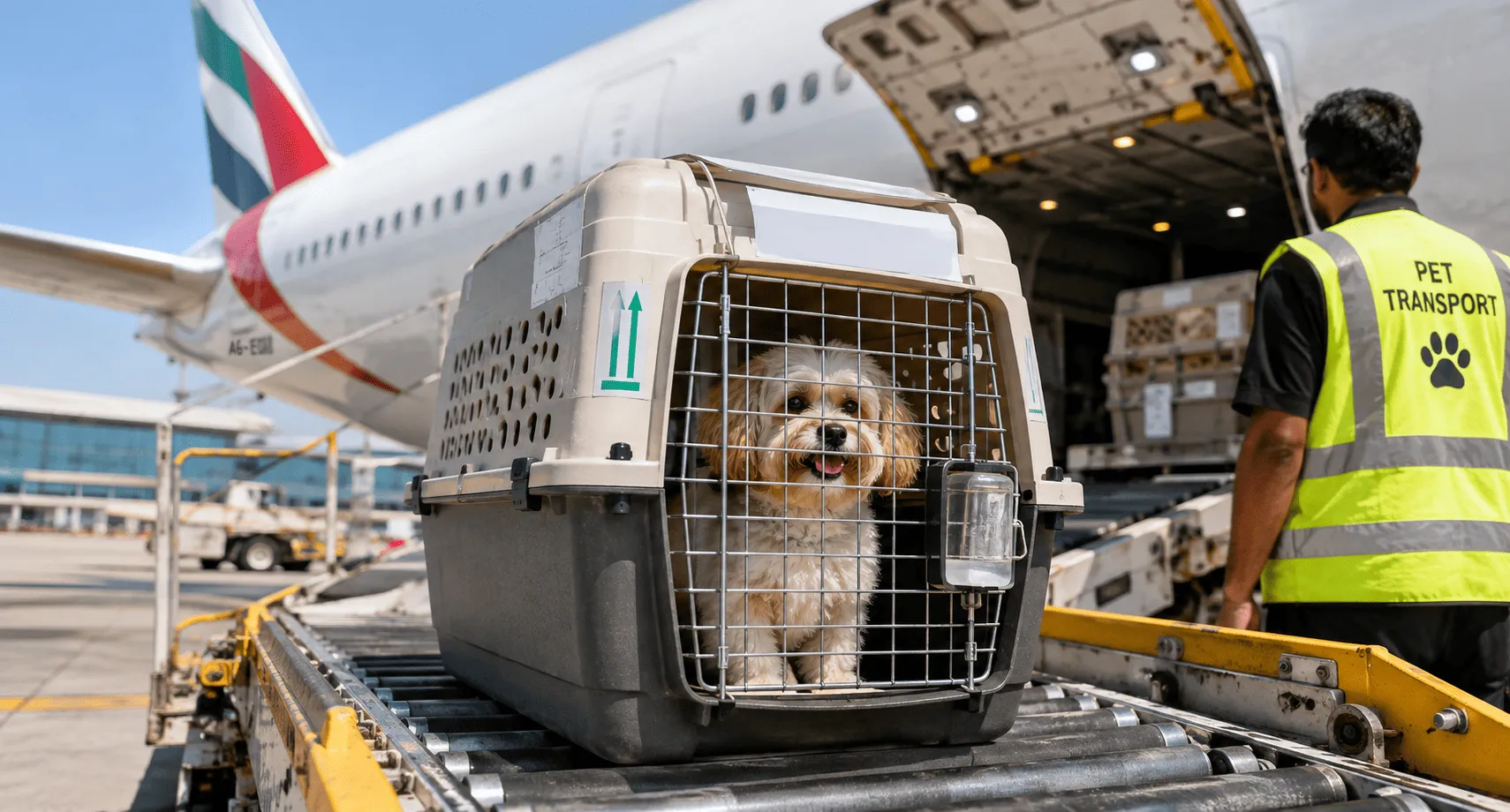
Pet Transport From One Country to Another in Dubai: A Complete Guide for UAE Pet Owners
Moving to a new country is exciting, but if you have a dog or cat, your biggest concern is often, "How do I safely transport my pet?" Fortunately, Dubai has a well-established pet relocation process that makes international pet travel possible when all regulations are followed.
Whether you're relocating for work, returning home, or moving your furry family member to join you overseas, this guide explains everything UAE pet owners need to know about international pet transport from Dubai.
Why Pet Transport Requires Careful Planning
Unlike regular luggage, pets are considered live animals and must travel according to international veterinary and airline regulations.
Every destination country has its own requirements, which may include:
Import permitsExport health certificates
Vaccination records
Microchip identification
Rabies antibody testing (for some countries)
Government approvals
Airline-approved travel crates
Missing even one document can delay your pet's journey or even result in quarantine upon arrival. UAE import and export rules are managed by the Ministry of Climate Change and Environment (MOCCAE), and pets entering the UAE generally require an import permit, valid health documentation, microchipping, and compliant vaccinations.
When Do People Need International Pet Transport?
Many UAE residents relocate with pets every year.
Common situations include:
Moving permanently to another countryReturning home after working in Dubai
International job transfers
Family immigration
Students relocating abroad
Long-term overseas assignments
Bringing a newly adopted pet to the UAE
Returning to Dubai with a pet after living abroad
Countries UAE Residents Commonly Relocate Pets To
Some of the most popular destinations include:
United KingdomCanada
Australia
United States
Germany
France
Netherlands
India
Singapore
New Zealand
Each country follows different animal import regulations, so preparation should begin several weeks—or sometimes months—in advance.
Step-by-Step Process for International Pet Transport from Dubai
1. Visit a Licensed Veterinarian
The first step is a complete health examination.
Your veterinarian will verify that your pet is:
Healthy enough to travelFree from contagious diseases
Up to date on vaccinations
Suitable for international transport
2. Microchip Identification
Most countries require an ISO-compliant microchip before travel.
The microchip serves as your pet's permanent identification and must match all official documents.
3. Vaccinations
Vaccinations are mandatory.
Typically required vaccines include:
For Dogs:
RabiesDHPP
Kennel Cough (depending on destination)
For Cats:
RabiesFVRCP
Many countries require rabies vaccination to be administered before travel according to specific timelines.
4. Rabies Antibody (Titre) Test
Some countries require a Rabies Neutralizing Antibody Titre Test (RNATT/FAVN).
This blood test confirms your pet has sufficient immunity against rabies.
Not every destination requires it, but countries such as Australia and New Zealand often do.
5. Obtain Export Health Certificate
Before leaving Dubai, your pet needs an official veterinary health certificate.
This certificate confirms:
Good healthVaccination compliance
Microchip information
Fitness to fly
6. Export Approval
Pets leaving the UAE typically require export documentation issued through the appropriate government process, while pets entering the UAE require MOCCAE permits and inspection. Requirements vary depending on the destination country and airline.
7. Airline Booking
Not every airline transports pets.
Some allow:
Cabin travel (small pets only)Checked baggage
Manifest cargo
Large dogs usually travel as manifest cargo.
Always book pet travel well in advance because airline capacity for live animals is limited.
8. IATA-Approved Travel Crate
Your pet must travel inside an airline-approved crate.
The crate should allow your pet to:
Stand naturallyTurn around comfortably
Lie down fully
A properly sized crate helps reduce stress during the journey.
9. Airport Documentation
Before departure, you will need documents such as:
Pet passport (if applicable)Vaccination records
Health certificate
Import permit (destination country)
Export documents
Microchip details
Owner identification
Having multiple copies of every document is recommended.
Importing a Pet into Dubai
If you're bringing your pet into the UAE, you will generally need:
MOCCAE import permitMicrochip
Rabies vaccination
Official veterinary health certificate
Vaccination records or pet passport
Rabies antibody test if required based on the exporting country's risk classification
Airline-approved transport crate
The UAE also limits personal imports to a maximum number of companion animals per year in most circumstances and requires inspection on arrival.
How Long Does International Pet Relocation Take?
The timeline depends on the destination.
Typical preparation includes:
Veterinary examination: 1 dayVaccinations: Depends on existing records
Import permits: A few days to several weeks depending on the country
Rabies titre testing (if required): Several weeks
Airline scheduling: Depends on availability
Planning at least 6–12 weeks before your intended travel date is a good rule of thumb, especially for destinations with stricter biosecurity requirements.
Common Challenges Pet Owners Face
International pet transport can become stressful because of:
Incorrect paperworkMissed vaccination deadlines
Airline restrictions
Country-specific regulations
Incorrect crate sizes
Flight delays
Seasonal temperature restrictions
Preparing early helps avoid many of these issues.
Tips for a Stress-Free Journey
Begin planning well in advance.Confirm your destination country's latest import rules.
Keep vaccinations current.
Use an airline-approved travel crate.
Attach identification tags to the crate.
Pack food, water instructions, and emergency contact details.
Work with experienced veterinary professionals or reputable pet relocation specialists if the process feels overwhelming.